The Philippines grows four kinds of coffee
Robusta, Arabica, Excelsa, and Liberica. Each tastes different, and you can try all four without leaving the country.
What we've learned about Philippine coffee so far, written the way we'd explain it to a friend. Notes marked "Still learning" are the ones we're still checking.
Robusta, Arabica, Excelsa, and Liberica. Each tastes different, and you can try all four without leaving the country.
Dark roasting can cover up broken or insect-damaged beans, the ones we call bokbok. It also makes every bean taste the same: burnt. A medium roast can't hide much.
Iced coffee is hot coffee poured over ice. Cold brew steeps grounds in cold water for many hours. Less heat means less bitterness, which is why it's easier to drink black.
Light, golden, medium, medium dark, dark: how long and how hot the beans were roasted. Lighter keeps more of the bean's own flavor. Darker adds more roast flavor.
Start with medium roast cold brew over ice and a splash of plant milk. Use a little less milk each week. No pressure: a sweet latte is still a good coffee.
The country was once a big coffee exporter. Coffee rust hit farms hard in the late 1800s, and the industry never fully recovered. We're reading more and will share sources here.
Older references list it as a Liberica variety. A 2025 genomic study supported by Kew treats it as its own species, Coffea dewevrei. Classification has changed over the years, so you'll see both names.
We're choosing a new supplier now. Once we know the farms, we'll name them here and on every bottle.
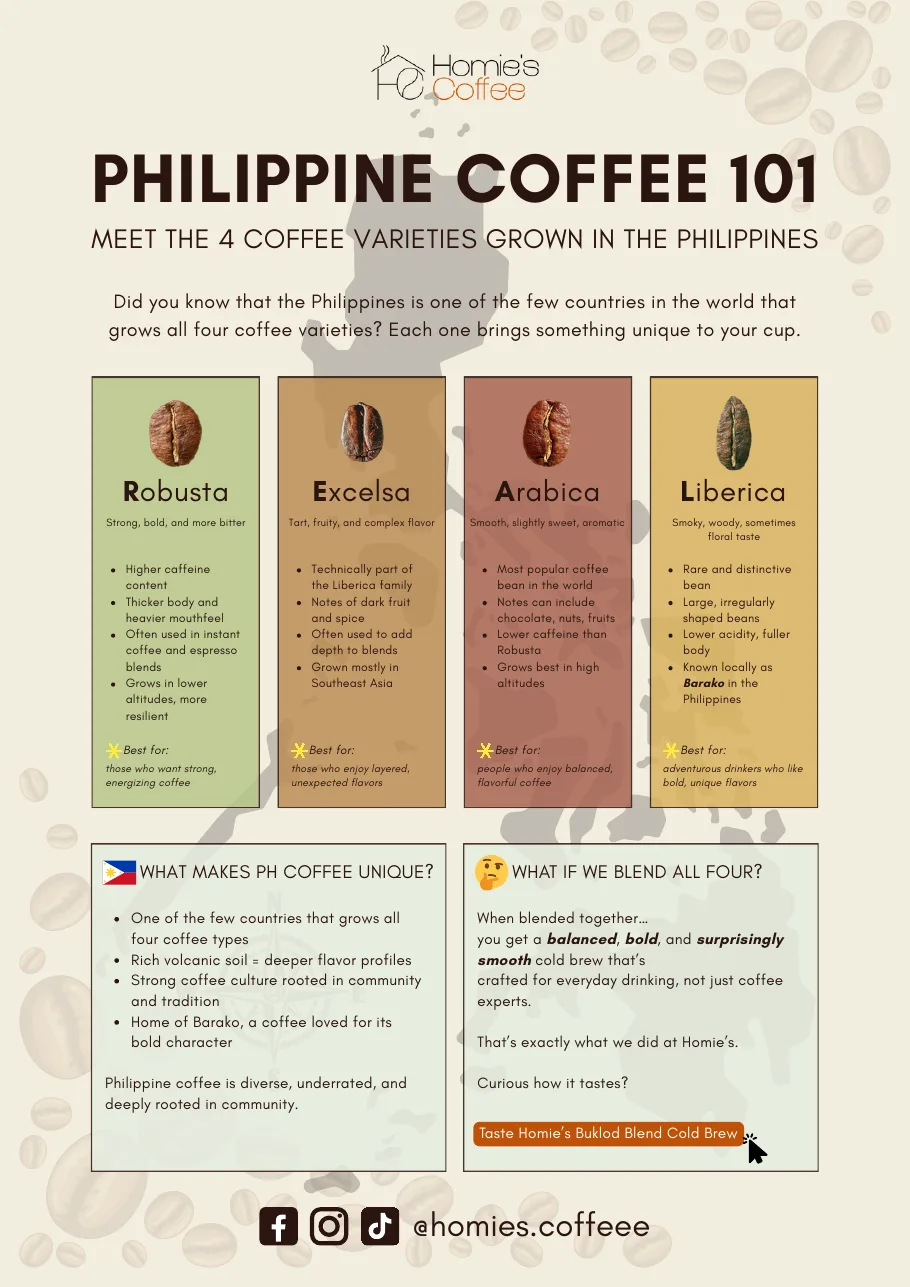
One page on the four species: taste, caffeine, where they grow, and who each one is for. Want the whole story? The full ebook is below.
The full guide
Ten chapters on the beans, places, and people behind your cup: the four species, a regional coffee trail from Batangas to Mindanao, brewing at home, and what to ask before you buy local. 82 pages, made for phones and tablets.
PDF, instant download through Gumroad. Checkout shows the price in pesos.